


My Loverse: Interactive Story
4.397.00 Reviews
App Specs
- Version
- 2.7.0
- Updated On
- License
- Free
- Downloads
- 50,000+
- Developer
- MINDZEN AI
- Categories
- Simulation
- Platform
- Android
Screenshots






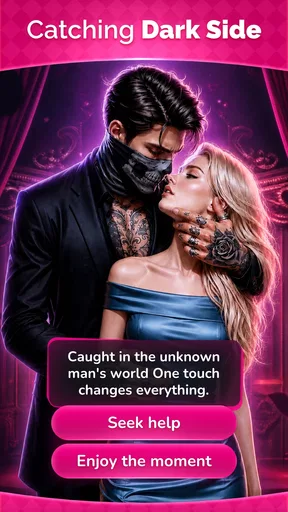

 Analysis by AppCompare
My Loverse: Interactive Story is a mature, choice-driven simulation game from MINDZEN AI that puts romance and personal decisions at the center of the experience. I approached it less like a traditional game with reflex challenges and more like a digital story I could guide at my own pace. The themes include office relationships, darker romance, and Alpha-mate fiction, so the tone is aimed at adults rather than younger players.
That focus makes it an interesting option for anyone who enjoys interactive novels but wants more personal involvement than simply reading chapters. I could pause over decisions, consider what kind of relationship direction I wanted, and treat each scene as a small piece of a larger role-playing experience. At the same time, the game is not a universal recommendation. Its mature rating, romance-heavy subject matter, and possible purchase costs matter just as much as its storytelling appeal.
How the story feels to use and follow
I find the story-first format most useful when I decide what I want from a session before opening the game: a few scenes to unwind, or a chance to think through a character’s response. That small choice helps me enjoy the pacing without rushing dialogue or treating every option like a puzzle with a hidden correct answer. Next, it’s worth looking at how that reading-and-choosing rhythm fits into an ordinary day.
Readability and navigation shape the experience
The most important practical feature in a game like this is not fast movement or complicated controls; it is whether I can comfortably understand the text and make a decision without feeling rushed. My Loverse is built around that reading-first rhythm. I spend time taking in a scene, following the dialogue, and choosing how I want the story to continue. That makes it naturally suited to short reading sessions, such as a quiet break or a few minutes before bed.
I found this format easier to approach than a conventional simulation with several systems competing for attention. There is no need to learn a large control scheme before the story becomes enjoyable. The main mental task is interpreting the situation and deciding which response fits the character or relationship I want to pursue. For readers who prefer narrative context over mechanical complexity, that is a real strength.
There is also a trade-off. A story game depends heavily on the clarity of its writing and the organization of its scenes. If I am tired, distracted, or reading on a small screen, a subtle emotional choice can be harder to evaluate than an obvious action in a conventional game. I recommend playing with enough time to read the full exchange rather than tapping quickly through it. The better approach is to treat each decision as part of the role-playing, not as a button to clear before the next scene.
The game’s store summary points toward several romance settings, including office and darker relationship scenarios. That variety can help the experience feel less narrow, but it also means the tone may change depending on the type of story I choose. Someone looking only for lighthearted romance should pay attention to the mature positioning before starting. The adult rating is not a minor label here; it is useful guidance about the intended audience and atmosphere.
Worth Reading Before You Choose

Flipboard Shows What News Apps Must Do Beyond the Feed

Switching to Android Auto Means Rethinking Your Driving Routine

Google Calendar Makes a Crowded Week Easier to Manage

Ludo King Makes the Most of the Minutes Between Plans

Baby Panda World Brings Quick Play to Modern Phones, but Its Game Library Feels Busy

ESPN’s Live Game View Makes Following Close Games Easier
One practical tip is to decide what kind of protagonist I want to play before making important choices. Do I want a cautious character, a direct one, or someone willing to take emotional risks? Keeping that intention in mind makes the decisions feel more coherent. Without it, I can end up selecting replies based only on curiosity and then feeling that the character’s behavior no longer matches the story I imagined.
Reading comfort is more important than speed
For players with attention differences, a choice-based story can be easier than an action game because the central activity is paced around reading. I can stop between scenes and return when I have more concentration. That is helpful in everyday use: if I am commuting, waiting for an appointment, or dealing with a noisy environment, I can play in small portions rather than needing to complete a timed challenge.
However, this benefit depends on how comfortable each person is with extended text and emotional dialogue. Anyone who finds long conversations tiring may prefer a more visual simulation or a game with shorter interactions. My Loverse asks me to stay engaged with the wording, context, and relationship tension. It is not an ideal choice when I want a quick, low-attention distraction.
I also think the game suits readers who like imagining the scene for themselves. Interactive stories often leave more room for personal interpretation than fully animated games. That can be enjoyable for someone who wants to fill in the emotional details mentally, but less satisfying for a player who expects elaborate visual feedback for every choice. The appeal is in directing the narrative, not in constant action on screen.
Motor and sensory considerations
From a motor perspective, a story-led format is less demanding than games that require rapid taps, precise aiming, or repeated gestures. My interaction is mainly about selecting responses and moving through the narrative. That makes it a reasonable option for players who want to avoid reflex-heavy controls. It can also work well when I am using a phone one-handed, provided I have enough time to read and select the intended response carefully.
Still, “low pressure” does not mean effortless for everyone. Repeated tapping can be uncomfortable for some players, and small choice areas may be frustrating if a person has limited precision. I would approach it cautiously if touch accuracy is a concern, especially during emotionally important scenes where selecting the wrong response may change the experience I intended to have.
Sensory comfort is another matter. The mature themes and darker romance direction may be more significant than visual or audio intensity. A player can be comfortable with the controls but still find certain relationship situations unpleasant or emotionally overwhelming. I would not recommend starting it casually around children, at work, or in a shared space where adult content could create an awkward situation. The mature seventeen-plus rating should guide where and with whom it is played.
For people who are sensitive to conflict, possessive romance, or emotionally intense scenarios, the best strategy is to choose a setting that matches their boundaries and stop when the tone becomes uncomfortable. The game’s central appeal comes from exploring relationships, so personal comfort is part of the decision. A more relaxed life simulation or a gentle puzzle game would be a better alternative for someone who wants to avoid romantic tension altogether.
One useful habit is to play with the phone’s general comfort settings already arranged to suit me, such as a display size or brightness level I normally use. That is not a special feature of the game, but it can make a text-centered experience much easier to sustain. I would also avoid playing when I am rushing, because the value of the choices is reduced if I cannot comfortably read the exchange before responding.
Situational access in ordinary life
The game works best in situations where I can give a story a little attention without needing to react instantly. A realistic example would be an evening when I have twenty quiet minutes: I can open a chapter, follow the relationship development, make a few decisions, and stop at a natural pause. That is more satisfying than trying to force a long session while multitasking.
It can also fit a stop-and-start routine. If my day is divided into short breaks, I can use the game as a serialized reading experience rather than expecting a complete adventure in one sitting. This is where its simulation category feels different from a conventional management game. I am not optimizing buildings, resources, or schedules; I am shaping a fictional social and romantic path.
That difference matters when comparing it with usual alternatives. A standard life simulator may offer broader activities and more open-ended customization, but it can demand more time and attention to manage its systems. A visual novel may deliver tighter writing and a more fixed route structure, while My Loverse is aimed at the feeling of choosing how a relationship unfolds. A romance novel offers a smoother, passive experience, but it does not let me steer the protagonist’s responses.
In my view, the game sits between interactive fiction and casual simulation. It is a good match for someone who wants the emotional focus of a romance story with the involvement of making decisions. It is less suitable for anyone expecting deep resource management, competitive play, exploration, or a large action component. Knowing that before downloading prevents the common disappointment of treating it like a completely different kind of simulation.
The free entry price makes it easy to try without paying upfront. That is useful for readers who are unsure whether the writing style or mature themes will suit them. However, the game includes in-app purchases ranging from $1.99 to $199.99 per item, so I would approach optional spending carefully. I would decide in advance whether I am comfortable making purchases and avoid treating a dramatic choice as a reason to spend impulsively.
This is especially important for players who enjoy collecting or completing every possible story path. Interactive romance games can encourage curiosity about alternate outcomes, and that curiosity can make optional spending feel more urgent than it really is. My recommendation is to play the free portion first, learn how the story rhythm feels, and only then decide whether the additional cost fits my entertainment budget.
Remaining barriers and who should skip it
The biggest barrier is thematic rather than technical. My Loverse is explicitly positioned for mature audiences, and its office romance, darker romance, and Alpha-mate themes will not suit everyone. I would skip it for a younger player, a shared family device, or anyone who wants romance without heavier or more adult-oriented material.
I would also skip it if I need a game that communicates primarily through action, audio, or visual spectacle. The core value comes from reading and choosing. Players with limited comfort reading on a phone may find the format tiring, and anyone who needs specific accessibility tools should check the device experience personally before committing to longer sessions. I would not assume that a low-reflex game automatically meets every accessibility need.
Another limitation is that the emotional payoff depends on accepting the conventions of interactive romance fiction. Some players will enjoy heightened drama, strong archetypes, and relationship-centered decisions. Others may find those conventions too intense or predictable. That is not a defect for the intended audience, but it does narrow the game’s appeal compared with a broader simulation where romance is only one optional activity.
The current version is 2.7.0, and the game requires Android 10 or newer. Those details are worth checking before installing, especially if I use an older phone or keep a separate device for casual games. The developer is MINDZEN AI, and the game has built a noticeable audience, with more than fifty thousand installs and a 4.3 average from roughly eight hundred ratings. Those figures suggest real interest, but they do not replace my own judgment about the themes or purchase structure.
I would also keep expectations realistic about replaying choices. The attraction of an interactive story is often the possibility of seeing different relationship outcomes, but replay value depends on how much variation I personally find meaningful. If I only want one polished romance narrative, a traditional novel may be more efficient. If I enjoy comparing decisions and imagining alternate versions of the protagonist, the interactive format has more to offer.
An inclusive verdict for the right reader
My Loverse is a focused game for adults who want romance-led interactive fiction rather than a broad, systems-heavy simulation. I like its low-reflex structure, its suitability for short reading sessions, and the way it lets me make the protagonist’s choices feel personal. The format can be comfortable for players who prefer deliberate interaction over speed, but it still requires sustained reading, touch selection, and emotional tolerance for mature relationship themes.
The best way to approach it is with clear expectations. Treat it as a branching story with simulation elements, not as an action game or a full life sandbox. Play in a private, calm setting, adjust the phone for comfortable reading, and make spending decisions before the drama begins. Those simple habits make the experience more controlled and reduce the chance that the mature content or optional purchases will catch me off guard.
With its free entry point, the game is easy to sample, while the wide purchase range means I should remain deliberate if I continue. I would recommend it to an adult reader who enjoys office romance, darker fictional scenarios, or Alpha-mate storytelling and wants to influence the direction through choices. I would point someone toward a gentler visual novel, a traditional romance book, or a wider life simulator if they need a different tone, stronger accessibility support, or more varied gameplay.
My final view is that My Loverse works best when I treat it as personal, paced storytelling. It does not try to serve every kind of player, and that narrow focus is both its identity and its main limitation. For the right reader, the ability to shape romantic scenes can make a quiet phone session feel engaging. For everyone else, the mature tone and text-centered design are good reasons to choose another game.
Pros
- Branching choices make each playthrough feel personal.
- Romance routes offer different personalities and relationship dynamics.
- Short chapters are convenient for quick mobile reading sessions.
- Character-focused storytelling creates emotional investment.
- The visual presentation makes dialogue scenes easy to follow.
Cons
- Some choices may require premium currency to unlock.
- Story progression can feel slow when chapters are released gradually.
- Certain routes may have less content than the main storyline.
- Repeated scenes can reduce replay value after multiple playthroughs.
- The app may require a stable connection for new story content.
FAQs for My Loverse: Interactive Story
What is My Loverse: Interactive Story?
My Loverse: Interactive Story is a romance-focused interactive fiction game where you follow dramatic storylines, meet different characters, and make decisions that influence conversations and relationships. It is designed for players who enjoy visual-novel storytelling, emotional choices, and branching scenes rather than traditional action gameplay. Your decisions can change how characters respond and may lead to different romantic developments.
How does gameplay work in My Loverse: Interactive Story?
The main gameplay consists of reading scenes, selecting dialogue options, and making decisions during important moments. These choices can affect your relationship with the characters, the direction of the story, and sometimes the scenes or outcomes you unlock. Progress is generally simple to understand, making the game accessible even if you have little experience with interactive romance or visual-novel apps.
Is My Loverse: Interactive Story free to download and play?
The app can generally be downloaded without an upfront purchase, but players should expect optional in-app purchases or limited resources. Some premium choices, outfits, chapters, or special interactions may require paid currency, while other content can be accessed by waiting, watching advertisements, or completing available activities. Check the store listing and in-game purchase details before spending money.
Does My Loverse: Interactive Story require an internet connection?
An internet connection may be needed for downloading story content, synchronizing progress, receiving updates, displaying advertisements, and processing purchases. Although some previously loaded scenes might remain available temporarily, offline access should not be assumed for the complete experience. A stable connection is recommended, especially when starting a new chapter or using features connected to your account.
Is My Loverse: Interactive Story suitable for all ages?
The game is aimed primarily at players who enjoy romance, relationship drama, and mature emotional themes. Depending on the chapter, it may include flirtatious dialogue, suggestive situations, conflict, or subjects that are not appropriate for younger children. Parents should review the official age rating, privacy information, and purchase settings before allowing a child to install or play the app.


